
PulseLake
For research teams: PulseLake organizes studies around reusable ontologies, automating survey design, analysis, and insight delivery across quantitative and qualitative data.
Built by Cerebrix OS · Artificial Intelligence · Analytics · Paid
In category: #1324 of 2052 · Artificial Intelligence
PulseLake is a Community listing on Launch Llama with 5 total upvotes, founded by Cerebrix OS who joined in May 2026, compared against 5 alternatives.
Community listing
Listing status
5upvotes
Community score
Cerebrix OS (Joined May 2026)
Founder
Compared against 5 alternatives
Market comparison
Launched on Launch Llama May 23, 2026 · #15 of 25 that day
About
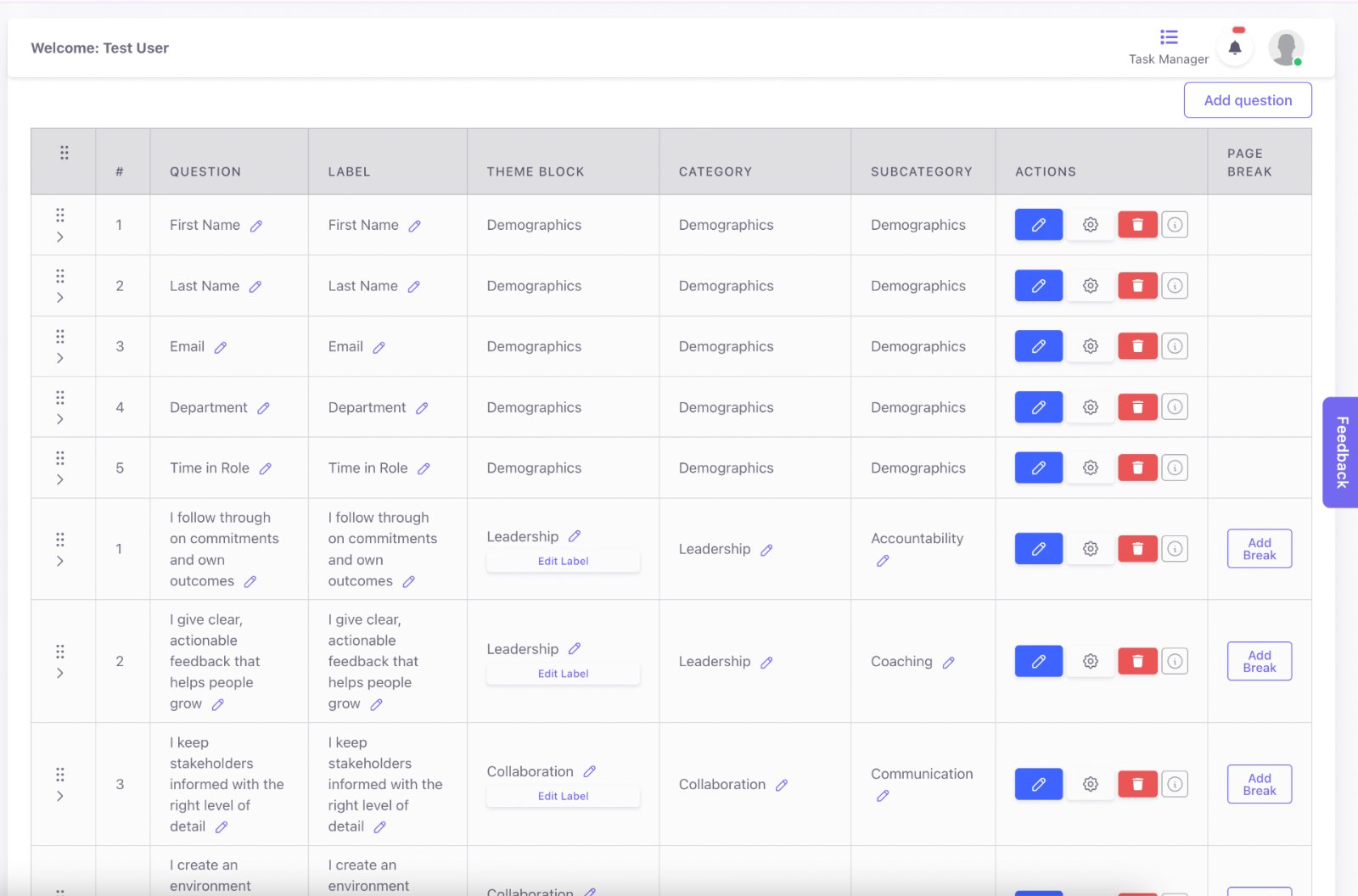
Pulselake is an AI-native, ontology-driven operating system for research operations, assessments, evidence management, and insight delivery. It helps research, consulting, CX, EX, product, and strategy teams design structured studies, launch surveys and assessments, collect responses, manage clients and collaborators, analyze quantitative and qualitative evidence, and deliver insights through dashboards, reports, portals, and automated workflows.
Unlike traditional survey tools, Pulselake organizes research around reusable ontologies: dimensions, sub-dimensions, questions, scoring models, benchmarks, segments, and evidence structures. This makes research easier to compare, reuse, automate, and turn into decisions.
With Pulselake, teams can run maturity assessments, diagnostics, customer and employee studies, pricing research, MaxDiff, conjoint analysis, feedback programs, qualitative research, and flexible research workflows in one platform.
Follow PulseLake: X (Twitter) · LinkedIn
Use Cases
- Designing, running and analyzing a market research study end to end, from framing hypotheses to delivering an executive readout
- Running AI-led or avatar-based interviews with real participants and turning transcripts into structured qualitative evidence
- Exploring hypotheses and pricing scenarios with synthetic populations and simulations before committing to observed research
Who it is for
- Market research and insights professionals who run studies end to end.
- Research teams that want reusable ontologies and institutional knowledge across studies.
Pricing
PulseLake is a paid product. See the website for current pricing.
FAQ
What is PulseLake?
PulseLake is an AI-native operating system for market research and insight professionals. It gives researchers one system to frame questions, conduct human or AI-native research, deploy agents, analyze evidence, preserve institutional knowledge, automate workflows and deliver decision-ready outputs.
Who is PulseLake for?
PulseLake is built for internal insights teams, market research firms and consulting practices: the people who design studies, generate evidence and turn it into decisions for their organizations or their clients.
How is PulseLake different from a survey or research tool?
Most research tools help run a single study. PulseLake runs the research system around it: an execution layer for running research, an intelligence layer for understanding everything the organization knows, and a delivery layer for turning insight into something people use, all sharing one persistent study context.
What kinds of research can you run in PulseLake?
PulseLake supports four research modes. Traditional research covers surveys, qualitative research, assessments, panels and advanced methods. AI-led interviews run conversations with real participants. Synthetic research uses explicit, versioned personas and populations. Simulation explores scenarios grounded in prior evidence and explicit assumptions.
What are AI-led interviews?
AI-led interviews use conversational and avatar-based AI interviewers that follow a protocol, probe adaptively and conduct interviews with real participants. Each conversation is turned into structured evidence inside the study, alongside its objectives and methodology.
How does PulseLake handle synthetic research?
Synthetic research in PulseLake uses explicit, versioned synthetic personas and populations to test instruments, concepts and hypotheses. Each has clear provenance, and there is a path into human validation, so synthetic findings become something to test with real people rather than a final answer.
What is research simulation?
Simulation in PulseLake uses scenario models grounded in prior evidence and explicit assumptions to explore what could happen under alternative conditions. Its purpose is to identify what to test next, not to replace research with real participants.
What is research intelligence?
Research intelligence is PulseLake's layer for understanding what the organization already knows. It combines persistent study context, a research knowledge graph, cross-study search and deep research, and natural-language questions answered with evidence provenance. A calculation mode computes answers against study data rather than generating them.
What do PulseLake's AI agents do, and who stays in control?
PulseLake includes specialized agents for research design, interviewing, qualitative analysis, deep research, reporting and client Q&A. Researchers retain judgment and approvals: the agents increase research capacity without replacing methodological judgment, evidence standards or accountability.
How does PulseLake deliver research results?
PulseLake delivers results through dashboards, automated PowerPoint reporting, client workspaces and portals, research Q&A, scheduled monitoring and downstream workflows, so insight reaches the people who act on it.
Alternatives
 SurveyFlipFor researchers: SurveyFlip creates AI-powered surveys and auto-analyzes responses so you turn feedback into decisions faster.
 Pushable AIFor enterprises: Pushable AI builds no-code AI agents connecting 500+ business apps so you automate customer support, lead qualification, and workflows.
More in Artificial Intelligence
New on Launch Llama
- HEICJPG Online
- ImageToImageAI.app
- NanoPic
- Nano Banana 21
- ditdah
- Treasures
- Finpado
- Ampli — social media scheduler
Launched this week · This month's launches · All products A–Z
Ask AI about PulseLake
Supporters
2 founders
2 founders supported PulseLake on Launch Llama.

For bots & AI agents
Machine-readable versions of PulseLake and Launch Llama. Fetch these instead of parsing this page.
This listing (.md) llms.txt llms-full.txt ai.txt Full catalog (.md) Endpoint index API docs MCP server MCP manifest Developer docs