
Quick Answer
The best beta testers are people who have the problem today, not friends being kind. Find them where they already talk about it: communities and subreddits in your niche, people who've complained about the problem publicly, your waitlist, former colleagues, and founder communities where people swap feedback. You need fewer than you think: 5 people watched closely will find most usability problems; 20 to 50 active testers tell you whether people come back. Ask them about what they did, not what they'd like. Then turn the happy ones into reviews: on Launch Llama, listings with 3+ reviews turned 3.6% of page views into website clicks, against 0.9% with none.
Key takeaways
- Recruit people with the problem, not friends. Search for the exact words people use to complain about it.
- Start with 5, then 20 to 50. Five close observations find most usability issues; 20 to 50 show whether people come back.
- Ask about behaviour, not opinions: "What did you do next?" beats "Do you like it?"
- Founders review founders: 1,911 reviews on Launch Llama founder listings averaged 4.6 stars.
- Leave the beta with reviews: 68% of reviews on Launch Llama arrived in a listing's first week.
How many beta testers do you need?
More testers isn't better if you can't talk to them. Twenty people you know by name beat 500 sign-ups you never speak to.
Where to find beta testers
1. People already complaining about the problem
Search for the exact words people use: "how do I [problem]", "[competitor] alternative", "[task] takes forever". Look on X, Reddit, LinkedIn, Indie Hackers, GitHub issues and the review pages of competing tools. People who complained last month are the most motivated testers you'll find.
"Saw your post about spending Friday afternoons on client reports. I'm building a tool that does them from your ad accounts in a minute. Would you try the beta and tell me what's missing? Free, and I'll set it up for you."
2. Communities where your buyers gather
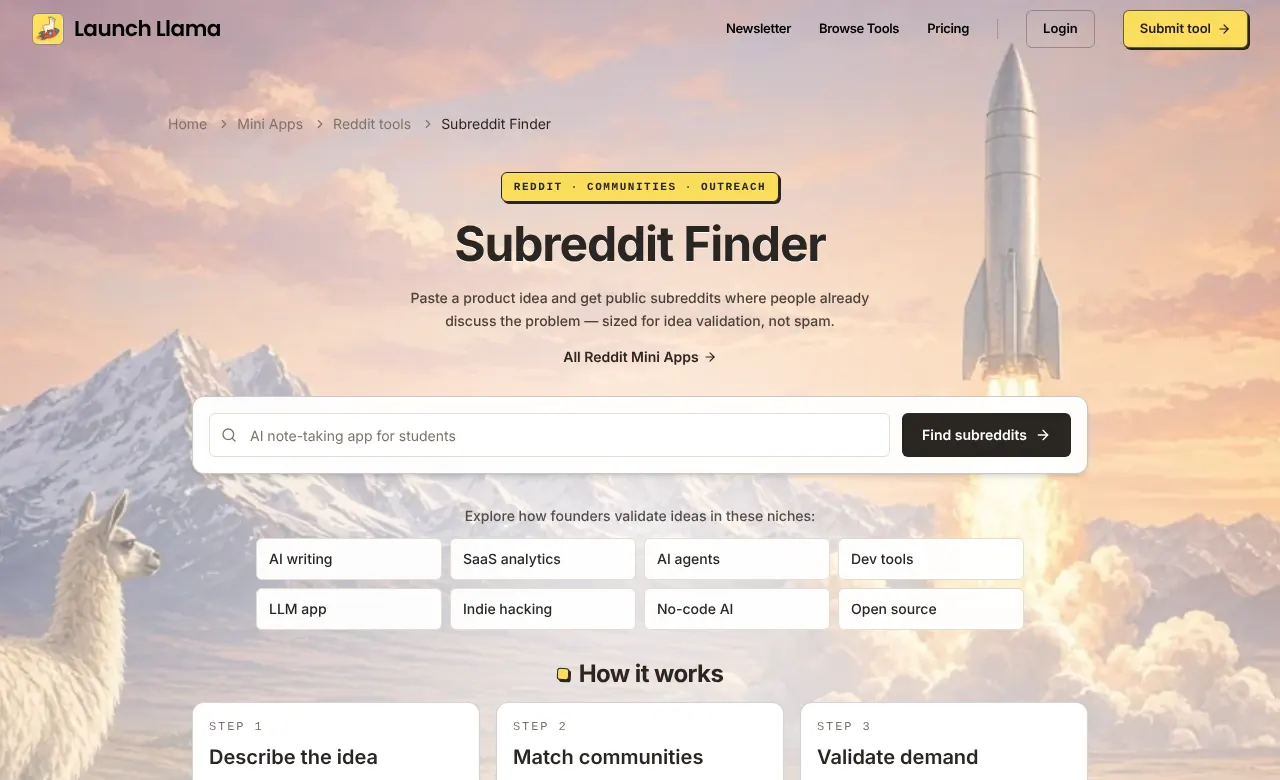
Subreddits, Slack and Discord groups, niche forums. Read the rules, help for a week, then ask for testers in the way the community allows (many have a weekly "feedback" or "show your project" thread). Our free subreddit finder finds communities where people already discuss your problem.
3. Your waitlist and followers
If you've collected emails, invite them in small batches, newest first (they remember why they signed up). No list yet? See how to build a waitlist from zero.
4. Former colleagues and your network
People you've worked with who have the problem give the most honest feedback, because they know you won't be offended. Ask them for "brutal feedback", and mean it.
5. Founder communities that swap feedback
Founders test each other's products all the time. On Launch Llama, every free listing asks its founder to try another tool and leave an honest review, so founders get feedback from founders as a matter of course. Across 1,911 reviews on founder listings, the average was 4.6 stars, and the median review came 4 days after the listing went live.
6. Beta launch platforms
BetaList (domain rating 76) and similar sites list products in beta for early adopters. They bring curious testers, not always your exact buyer, so use them alongside the targeted routes above.
What to ask beta testers
Good beta feedback is about what people did, not what they think they'd do.
Watch at least five people use it live, on a screen share, without helping. Write down every pause and every "where's the...". Those pauses are your roadmap.
How to run a beta that produces something
- Set a start and end date. Two to four weeks. Then go public.
- Give testers one task for the first session: "Build your first client report."
- Measure activation (share who complete that task) and week-one return (share who come back).
- Ship fixes weekly and tell testers what changed because of them. It keeps them engaged.
- Ask the happy ones for a review right after they get a good result.
- Thank everyone, and give testers something: a lifetime discount, an early-user badge, their name in the changelog.
Turning beta testers into reviews
Your beta testers are your first reviewers. Reviews were the strongest free signal in our listing data:
Free founder listings, May 4 to November 15, 2026. Correlations, not controlled tests.
Ask right after a win: "Glad the report worked! Would you write a quick review on our listing? Even one line about what you used it for helps." Ask them to mention who they are, what they used it for and one thing they'd improve. More in how to get reviews for your startup.
Mistakes to avoid
- Only friends and family. They'll be kind, and kindness is useless feedback.
- A beta with no end. It becomes a reason not to launch.
- Surveys instead of conversations. A 15-minute call teaches you more than 50 survey answers.
- Asking for feature ideas. Ask about problems; you decide the features.
- Paying for fake testers or fake reviews. You'll get feedback from people who'll never be customers, and platforms remove fake reviews.
Keep reading
- Soft Launch vs Public Launch: Which Should Your Startup Do First? (2026, With Launch Data)
- How to Get Reviews for Your Startup, and Why They Matter More Than Anything Else on Your Listing (2026)
- No Users After Launch? How to Get Your First 100 Users (2026)
- How to Build a Waitlist or Email List From Zero Before You Launch (2026)
- How to Promote Your Startup on Reddit Without Getting Banned (2026)
Frequently asked questions
Where can I find beta testers for free?
People who've complained about the problem publicly, communities where your buyers gather, your waitlist, former colleagues, and founder communities that swap feedback.
How many beta testers do I need?
Five for a usability check, 20 to 50 for a private beta that tells you whether people come back.
Should I pay beta testers?
Usually not with cash. Offer a lifetime discount, early access or credit instead. Paid testers often aren't your real buyers.
How long should a beta last?
Two to four weeks for most software, with a fixed date for the public launch.
How do I get beta testers to give honest feedback?
Watch them use it instead of asking what they think, ask about what they did, and tell them you want the bad news.
Get founder feedback
List your product free and get reviewed by founders.
Free listings on Launch Llama are permanent product pages, and founders review each other's tools. Reviews lifted click-through about 4x in our data.
List your product →