
Quick Answer
Build a waitlist the same way you'd get your first users: one clear page, one promise, and people you reach one at a time. Write a page that says who it's for, what it does and what they get for joining (early access, a launch discount, a say in the roadmap). Then send people to it from places where your buyers already are: posts about the problem you're solving, communities, your network, and other newsletters through cross-promotions. Write to the list every two to four weeks so it stays warm. Our own newsletters started small: The Stack's first issue went to 596 people and its latest to 45,955; Launch Llama's went from 1,564 to 15,596. Every list starts at zero.
Key takeaways
- A waitlist is launch-day leverage: people who asked to hear from you are your first users, votes and reviews.
- One page, one promise: who it's for, what it does, what joining gets you.
- The first 100 come from you: personal messages, posts about the problem, communities.
- The next 1,000 come from others: cross-promotions, guest posts, launch listings, referrals.
- Write every 2 to 4 weeks or the list goes cold. Smaller lists open more: ours opened at 45% under 5,000 subscribers.
Why a waitlist matters more than a launch day
Every launch platform rewards founders who bring their own people. A Product Hunt launch, a Show HN post or a weekly leaderboard all move faster when the first hour has real supporters. A waitlist is also:
- Validation. If nobody signs up for the promise, more code won't fix it.
- Your beta pool. Invite them in batches for a soft launch.
- An audience you own. Platforms change their rules; an email list doesn't.
Step 1: a one-page waitlist site
You need one page, not a website. It needs five things:
- A headline that names the job and the person. "Client reports from your ad accounts, in a minute. For agencies."
- One image of the product, even a rough one. People sign up for things they can picture.
- What joining gets them: early access, a launch discount, founder pricing, input on what gets built.
- One field: email. Ask anything else after they've joined.
- A thank-you page with one question: "What's the one thing you hope this does for you?" The answers write your launch copy.
Tools like Carrd, Framer, a simple Next.js page or a newsletter platform's landing page are all fine. Make sure it loads fast and shows a proper preview when shared; our free social preview checker shows how your link looks on X, LinkedIn and Slack.
Step 2: your first 100 sign-ups
The first 100 come from you, one at a time:
- Write down 100 people by name who have the problem: former colleagues, people who've posted about it, members of communities you're in.
- Message them personally. "I'm building X for people like you. Would you join the waitlist and tell me if I'm missing something?"
- Post about the problem, not the product. A post about what you learned from 20 interviews with agency owners gets sign-ups from agency owners.
- Answer questions in communities and mention the waitlist only where it's the honest answer.
- Build in public. Share what you're building, the decisions and the setbacks. People follow founders before they follow products.
Step 3: from 100 to 1,000
Now other people's audiences do the work:
Cross-promotions with other newsletters
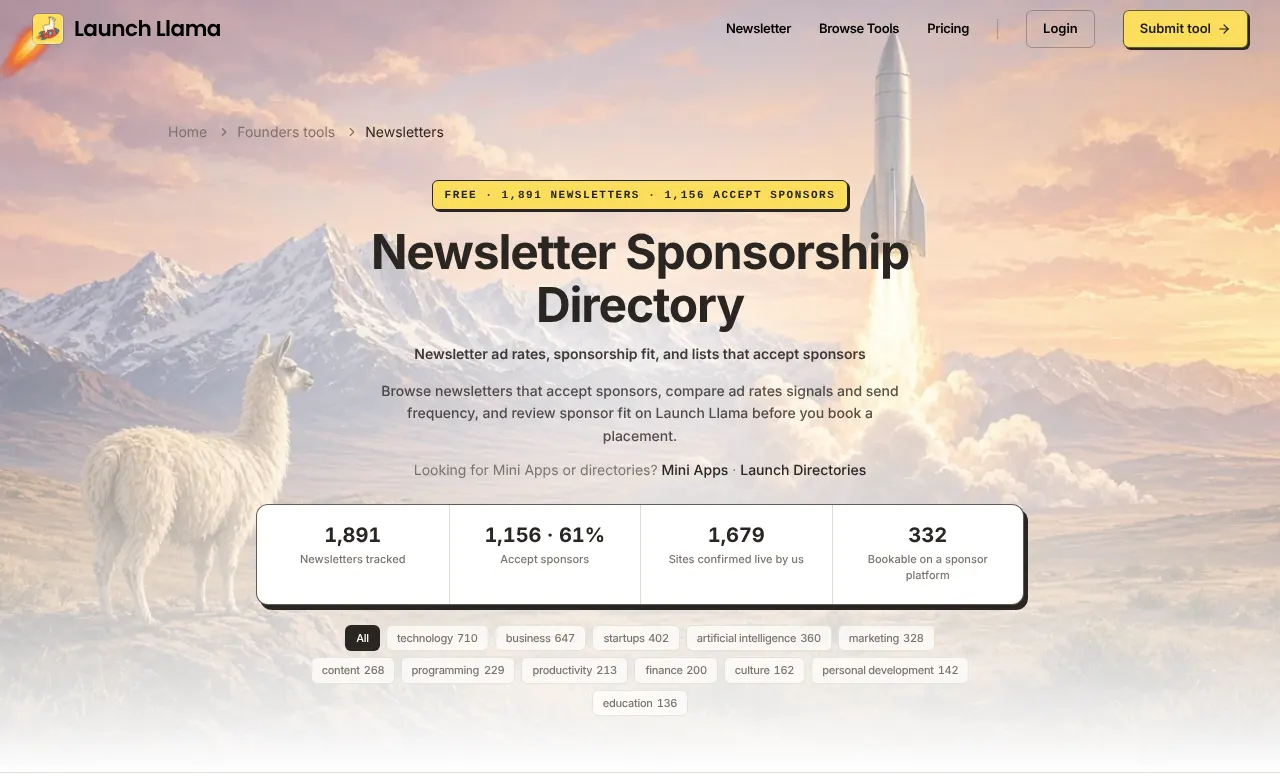
Many newsletters swap recommendations: they recommend you to their readers, you recommend them to yours. Of the 1,679 live newsletters in our directory, 922 do cross-promotions. Find ones your buyers read and propose a swap, even at small sizes. Our free newsletter directory filters them by topic.
Guest posts and features
Write something useful for a newsletter or blog your buyers read, with a link to the waitlist at the end. Curators want good content; see how to get featured in a newsletter for free.
A launch listing with a waitlist link
Pre-launch products can list too. A listing on a launch directory is a permanent page with a link to your waitlist, and it keeps collecting visitors after the week ends.
A referral nudge
On the thank-you page and in the welcome email: "Know someone who fights with client reports? Send them this link." Some founders move people up the list for referrals. It works best when the product is something people are proud to share.
Something useful to give away
A free calculator, template or checklist that your buyers would use anyway, with the waitlist offered at the end. A small, genuinely useful tool can bring sign-ups for months.
Step 4: keep the list warm
A waitlist that hears nothing for six months forgets why it signed up. Write every two to four weeks:
- What you built this month, with a screenshot.
- One thing you learned from users or interviews.
- A question: "Which of these two would you use first?"
- The launch date, once you have one.
Smaller lists open more. Our Launch Llama newsletter had a median open rate of 45.3% under 5,000 subscribers, 41.1% at 5,000 to 10,000 and 33.5% at 10,000 to 20,000. Early on, your list is at its most engaged. Use it: reply to every reply.
Step 5: launch to the list
On launch day, your list is your first wave:
- Email the list first, a few hours before you post anywhere else.
- Give them something: the launch discount you promised, early access, a founder price.
- Ask for feedback and a review, not votes.
- Send a short follow-up two or three days later to people who opened but didn't sign up.
Our own lists, for scale
Our own sends, from src/data/research-stats.mjs, November 2026.
Both started with a few hundred to a couple of thousand people. Together they're now a network of 69,000+ subscribers.
Mistakes to avoid
- Collecting emails and never writing. The list goes cold and your launch email lands in spam.
- Buying lists. It hurts deliverability and isn't legal in many places.
- A vague promise. "Something big is coming" gets nobody.
- Asking for too much on sign-up. Email only. Ask the rest later.
- Waiting until launch week to start. Start the list the day you start building.
Keep reading
- No Users After Launch? How to Get Your First 100 Users (2026)
- Soft Launch vs Public Launch: Which Should Your Startup Do First? (2026, With Launch Data)
- How to Get Your Product Featured in a Newsletter for Free (2026)
- Low Newsletter Open Rate? Why It Dropped and How to Fix It, With 131 of Our Own Sends (2026)
- How to Validate a Startup Idea Before You Build It (2026 Step-by-Step, With Launch Data)
- Startup Emails Going to Spam? How to Fix Deliverability for Newsletters and Launch Emails (2026)
Frequently asked questions
How do I build a waitlist with no audience?
Message people who have the problem one by one, post about the problem in places your buyers read, help in communities and swap recommendations with small newsletters in your niche.
How many people should be on a waitlist before launch?
There's no fixed number. A hundred engaged people who have the problem is enough to run a soft launch and start a public launch with real supporters.
What should a waitlist page include?
A headline that names the job and the person, one product image, what joining gets them, and a single email field.
How often should I email my waitlist?
Every two to four weeks, with real progress and a question. Long silences make people forget why they signed up.
Is a waitlist the same as a newsletter?
It starts as one list for one product. Many founders turn it into a newsletter once they have more to share than launch updates.
Distribution as a Service
No list yet? Borrow ours.
Featured puts your launch in front of 69,000+ subscribers across the Launch Llama and The Stack newsletters, plus every social channel we run. $49 a week or $99 a month.
See the Featured plan →