
Quick Answer
Journalists don't cover launches; they cover stories. To get press, find writers who already cover your space, give them a real angle (original data, a trend you can show, a surprising customer result or a strong founder story), and pitch in five sentences with everything they need to write it. Offer one outlet an exclusive for a set date and time, prepare a press kit (screenshots, logo, founder photo, key numbers) and follow up once. Start with niche newsletters, trade blogs and podcasts: they're easier to reach and their readers are often your buyers. Of the 1,679 live newsletters we track, many feature new tools and 922 do cross-promotions. We don't publish press coverage data; this guide is based on common startup PR practice.
Key takeaways
- A story, not an announcement: data, a trend, a customer result or a founder story.
- Pitch the right writer, someone who covered your space recently.
- Five sentences: the news, why now, the proof, the offer, the ask.
- One exclusive for a set date often beats a mass pitch.
- Niche first: trade blogs, newsletters and podcasts reach your buyers and are easier to land.
What counts as a story
"We launched a new tool" is rarely a story by itself. Data is the strongest angle for a small startup, because nobody else has it.
Find the right writers
- Search for recent articles about your space and note who wrote them.
- Read their last few pieces so your pitch fits what they cover.
- Check how they want to be pitched: many say so on X, LinkedIn or their author page.
- Start a list of 20 to 30 writers, split into tiers: niche, mid-size, big.
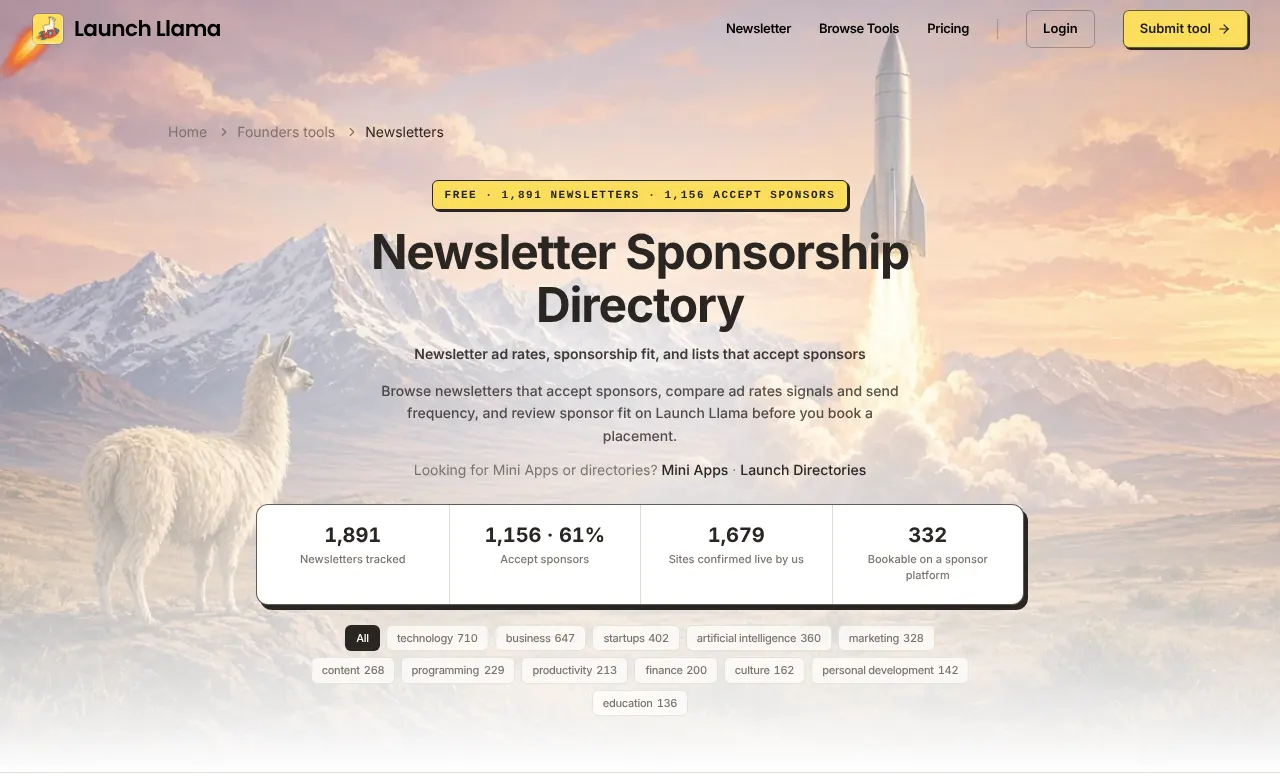
Also list niche newsletters, podcasts and blogs. Our free newsletter directory filters 1,679 live newsletters by topic.
The five-sentence pitch
Subject: Data: agencies spend 3 hours per client report
Hi Sam, I saw your piece on agency margins last month. We analysed 5,000 client reports built by 400 agencies and found they spend an average of 3 hours on each, mostly copying numbers between tools. I'm the founder of ReportKit, which we launch on Tuesday, and our beta agencies cut that to 4 minutes. Happy to share the full dataset and two agency owners who'd talk on the record. Would that be useful for a piece?
- Why them (their recent piece).
- The news (the data or story).
- Why it matters now.
- Who you are, in one line.
- What you can offer, and a simple question.
No attachments. Link to a press kit instead.
Offer an exclusive
An exclusive gives one outlet the story first, for a set date and time (the "embargo"). Writers value it because they're not competing with everyone else.
- Offer it to your top-choice writer about one to two weeks before launch.
- Give them a day or two to answer, then move to the next.
- Once it's agreed, don't pitch the same story elsewhere before it runs.
Prepare a press kit
A simple page with:
- A one-paragraph description and a one-line pitch.
- Key numbers (users, results, data findings) with dates.
- High-resolution screenshots and a short demo video.
- Logo files and founder photos.
- Founder bio and contact details.
- Customer quotes, with permission.
Follow up once
Send one short follow-up a few days later with something new (a chart from the data, a customer available to talk). If there's no answer, move on. Writers get hundreds of pitches; silence usually means not now, not never.
Easier wins than big outlets
See how to get featured in a newsletter for free. On Launch Llama, the weekly #1 free listing goes out to 69,000+ newsletter subscribers, and editors also pick strong free listings.
Common PR mistakes
- Mass emailing the same pitch to hundreds of journalists.
- Pitching a product announcement with no story.
- Long pitches with attachments.
- Following up more than once or twice.
- Pitching writers who don't cover your space.
Keep reading
- How to Get Your Product Featured in a Newsletter for Free (2026)
- How to Write a Launch Announcement Post That Gets Read (Templates for X, LinkedIn, Email and Communities, 2026)
- How to Launch a Product Successfully in 2026: The Launch Plan Our Best Listings Followed
- What to Do Before Launch Day: A Pre-Launch Checklist for Startups (4 Weeks Out to Launch Morning, 2026)
Frequently asked questions
How do I get press coverage for my startup?
Find writers who cover your space, give them a real story (data, a trend, a customer result or a founder story), pitch in five sentences, offer an exclusive and follow up once.
Do I need a PR agency for a startup launch?
Usually not at the start. A founder with a real story and a short, targeted pitch can land niche and mid-size coverage alone.
What is a press embargo?
An agreement that a writer can prepare a story early but won't publish it before a set date and time, usually your launch.
What should a startup press kit include?
A short description, key numbers, screenshots, a demo video, logo files, founder photos and bio, contact details and customer quotes.
How far before launch should I pitch the press?
About one to two weeks for an exclusive or embargoed story, and earlier for publications that plan further ahead.
Get featured to 69,000+ subscribers
Coverage that's guaranteed.
Featured includes a feature in our newsletter network (1 per 4 weeks subscribed), plus social posts and top placement in the directory. $49 a week or $99 a month.
See the Featured plan →